
What Is the AR Process? A Step by Step Guide for Businesses
In a business & resource general ledger, the accounts receivable (AR) balance is the amount the company has given on credit to its customers. It is an asset to the business, hence maintaining the AR balance is very essential.
The Accounts Receivable process, commonly known as the AR process, is one of the most critical financial functions in any organisation. It directly impacts cash flow, working capital, and overall financial stability.
If managed efficiently, the AR process strengthens liquidity and supports growth. If neglected, it can lead to delayed payments, rising bad debts, and operational strain.
This comprehensive guide explains what the AR process is, how it works step by step, and why many companies are now opting for AR Outsourcing India to improve efficiency and financial control.
What Is the AR Process?
The AR process refers to the structured workflow through which a business tracks, manages, and collects payments owed by customers for goods or services delivered on credit.
It includes credit assessment, invoice generation, payment tracking, follow ups, reconciliation, and reporting.
In simple terms, the AR process ensures that revenue recorded on paper turns into actual cash in the bank.
Why the AR Process Is Important for Businesses
A strong AR process helps businesses:
- Improve cash flow management
- Reduce Days Sales Outstanding
- Minimise bad debt write offs
- Strengthen customer relationships
- Enhance financial forecasting accuracy
- Maintain compliance and documentation
Companies that optimise their receivables cycle are better positioned to manage growth and mitigate credit risk.
Step by Step AR Process Explained
Step 1: Customer Credit Evaluation
Before extending credit, businesses assess customer creditworthiness. This may involve reviewing financial records, payment history, credit scores, and risk exposure.
A structured credit evaluation reduces the risk of delayed payments and defaults.
Step 2: Setting Credit Terms
Clear payment terms are defined, including:
- Credit period
- Payment method
- Late payment penalties
- Dispute resolution framework
Transparent agreements prevent misunderstandings and strengthen compliance.
Step 3: Invoice Generation and Delivery
Accurate and timely invoicing is essential. Invoices must include:
- Invoice number
- Payment due date
- Itemised details
- Tax information
- Payment instructions
Delayed or inaccurate invoices often result in delayed payments.
Step 4: Payment Tracking and Monitoring
This stage involves tracking outstanding invoices through ageing reports and monitoring DSO.
Regular monitoring helps identify early warning signs of delayed payments.
Step 5: Follow Up and Collections
Professional follow ups are conducted through reminders, calls, or emails. Structured escalation is initiated when necessary.
Maintaining professionalism during this phase is critical to preserving client relationships.
Step 6: Reconciliation and Reporting
Once payments are received, accounts are reconciled, and financial reports are updated.
Accurate reporting ensures transparency and supports strategic decision making.
Common Challenges in the AR Process
Many businesses struggle with:
- Manual invoicing errors
- Delayed follow ups
- Poor credit assessment
- Disputed invoices
- Lack of automation
- High DSO and cash flow gaps
As businesses scale, managing AR internally can become resource intensive and complex.
Why Businesses Are Choosing AR Outsourcing India
To address these challenges, many organisations are turning to AR Outsourcing Service India providers for specialised support.
Outsourcing helps businesses:
- Reduce operational burden
- Improve collection efficiency
- Leverage automation and analytics
- Access trained financial professionals
- Maintain compliance standards
- Lower overall processing costs
Professional AR Outsourcing India solutions combine technology, expertise, and structured workflows to streamline receivables management.
How AR Outsourcing Improves Cash Flow
When handled by experts, AR management becomes proactive rather than reactive.
Outsourcing partners focus on:
- Faster invoice processing
- Consistent follow ups
- Dispute resolution
- Real time reporting dashboards
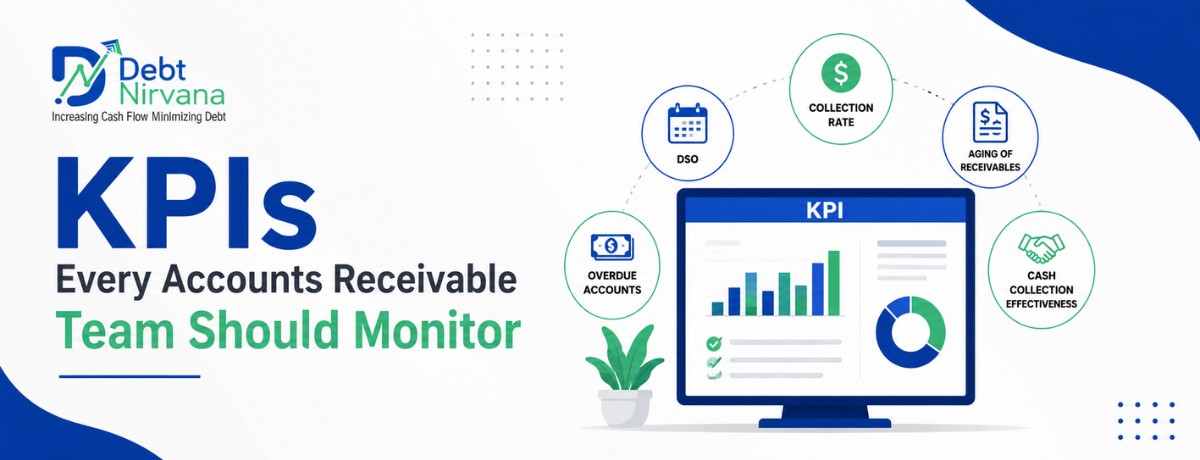
- Performance tracking through KPIs
This structured approach reduces Days Sales Outstanding and strengthens liquidity.
If you are exploring structured receivables management, learn more about AR Outsourcing Service India here:
You can also explore how Debt Nirvana supports businesses with financial process optimisation and advisory services:
In House AR vs Outsourced AR: Which Is Better?
There is no one size fits all answer. However, outsourcing becomes advantageous when:
- Invoice volumes increase significantly
- Internal resources are limited
- Cash flow gaps are widening
- Collection cycles are lengthening
- Compliance requirements are complex
Businesses seeking scalability and efficiency often benefit from professional AR Outsourcing India.
Best Practices to Strengthen Your AR Process
Whether managed internally or outsourced, the following best practices improve AR performance:
- Implement automated invoicing systems
- Conduct regular credit reviews
- Monitor DSO and ageing reports monthly
- Establish clear communication protocols
- Maintain detailed documentation
- Use data analytics for forecasting
Consistency and structure are the foundation of a healthy receivables system.
Final Thoughts
The AR process is far more than administrative bookkeeping. It is a strategic financial function that determines how efficiently revenue converts into cash.
A well managed AR process improves liquidity, reduces financial risk, and strengthens operational resilience.
For growing businesses in India, AR Outsourcing Service India offers a practical solution to streamline receivables, enhance reporting accuracy, and improve collection cycles.
By combining structured processes, automation, and expert oversight, AR Outsourcing India enables organisations to focus on growth while ensuring financial discipline remains strong.