
How AI Is Transforming Credit Risk Management in 2026
Credit risk used to be judged mostly by looking backward. Lenders checked your repayment history, your bureau score, and called it a day. That approach is changing fast. In 2026, AI is helping banks, NBFCs, and credit report services India read risk as it develops, not just after the fact. This shift matters because it […]
Credit risk used to be judged mostly by looking backward. Lenders checked your repayment history, your bureau score, and called it a day.
That approach is changing fast. In 2026, AI is helping banks, NBFCs, and credit report services India read risk as it develops, not just after the fact.
This shift matters because it affects how quickly you get approved for a loan, how fair that decision is, and how a debt collection agency decides to follow up if you fall behind. Below, we break down what’s actually changing and why it matters to borrowers and lenders alike.
What Is AI-Driven Credit Risk Management?
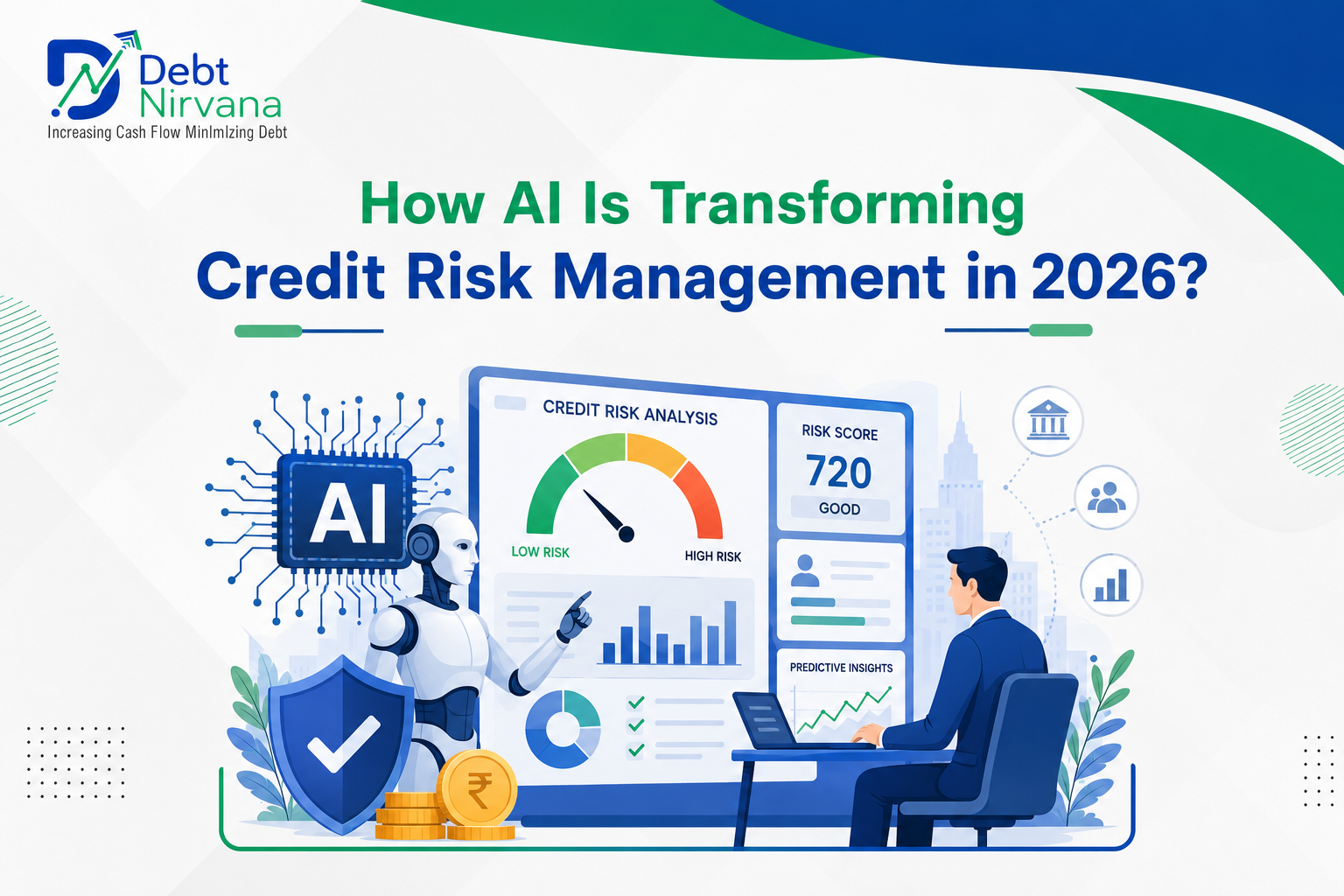
AI-driven credit risk management uses machine learning models to predict the likelihood of default, using far more data points than a traditional credit score alone. Instead of relying only on past repayment history, these models study cash flow patterns, transaction behavior, and even supply chain signals in real time.
The goal is simple: catch risk earlier, before it turns into a missed payment or default.
In practice, this means lenders can spot a struggling borrower weeks before a bureau report would show any change. That head start allows for softer interventions, like a payment plan, instead of aggressive recovery later.
As Avenga’s 2026 banking industry analysis points out, early and continuous risk detection is becoming central to how modern lending platforms are built, not just an add-on feature.
How This Differs From Old-School Credit Scoring
Traditional scoring models are rule-based. They apply fixed formulas to a limited set of variables like payment history, credit utilization, and account age.
AI models, by contrast, learn from patterns in the data itself. They can weigh dozens of behavioral signals simultaneously, adjusting as new information comes in, rather than assuming fixed statistical relationships between features.
Why Traditional Credit Scoring Is No Longer Enough
Traditional bureau scores work well for people with long, stable credit histories. They work poorly for everyone else.
Millions of Indians, especially self-employed workers, gig economy earners, and small business owners, don’t have enough formal credit history to generate a reliable score. This is often called the “thin-file” problem.
AI-based scoring fills that gap by pulling in alternative data. This includes things like:
- GST filing history
- UPI transaction patterns
- Utility bill payment consistency
- Bank statement cash flow trends
According to Godrej Capital’s 2026 industry analysis, AI-based credit scoring evaluates borrowers using behavioral data rather than relying solely on historical bureau scores, analyzing digital footprints and GST data to build a more complete credit profile. This is particularly useful for MSMEs and new-to-credit borrowers who were previously locked out of formal lending.
How AI Is Changing Credit Report Services in India
Credit report services India have traditionally focused on compiling data from banks and NBFCs into a single bureau score. That model is expanding.
Modern credit report services now increasingly blend traditional bureau inputs with AI-driven risk signals, giving lenders a more nuanced view of a borrower rather than a single number. This shift is being driven partly by demand from NBFCs and fintechs, who need faster, more inclusive underwriting to compete.
If you’re managing debt and want to understand where you actually stand, reviewing your credit report regularly is still the starting point, even as the scoring methods behind it evolve.
Faster Turnaround Times
One practical result of AI adoption is speed. Loan applications that once took days to underwrite can now be assessed in minutes, because AI models process structured and unstructured data simultaneously.
This doesn’t mean less scrutiny. It means the scrutiny happens continuously instead of at one point in time.
The Role of Alternative Data and Account Aggregators
None of this works without a secure way to share financial data. That’s where India’s Account Aggregator (AA) framework comes in.
The AA framework, introduced by the RBI, lets individuals share their financial data with lenders on a consent basis, for a specific purpose and time period.
As of December 2025, more than 2.6 billion accounts were enabled for data sharing and 252.9 million users had linked their accounts, according to Chartforest’s analysis of India’s financial inclusion data, with seventeen companies approved by the RBI to operate as Account Aggregators.
This infrastructure is what makes AI-based credit scoring possible at scale. Without consent-based data sharing, lenders would have no legal way to access the alternative data these models depend on.
It’s worth noting that this system is opt-in. Lenders cannot pull your data without explicit permission, and you can revoke access at any time.
AI and Debt Collection: A More Human Approach
It sounds counterintuitive, but AI is actually making debt collection less aggressive in many cases, not more.
A well-run Debt Collection Agency now uses AI to figure out which borrowers are genuinely at risk of long-term default versus those going through a temporary rough patch. That distinction changes the entire recovery strategy.
For someone with a short-term cash flow gap, AI models might flag a lighter-touch reminder or a restructured payment plan. For accounts showing sustained financial distress, the approach shifts toward more structured negotiation, ideally before the debt escalates into legal recovery.
This kind of early risk identification, drawn from forward-looking signals like payment behavior and cash flow variation, is exactly what Credable’s 2026 outlook for credit risk officers flags as one of the biggest shifts in credit risk management this year.
Regulatory Oversight: What the RBI Is Doing
Faster, smarter risk models only work if they’re trustworthy. The RBI has taken notice.
In June 2026, the RBI released a Draft Guidance on Regulatory Principles for Model Risk Management, open for public consultation. It applies to all models used by regulated entities, whether built in-house or bought from third parties, and expressly covers AI and machine-learning models.
The draft requires every regulated entity, including banks, NBFCs, and Credit Information Companies, to adopt a board-approved Model Risk Management Framework. Legal Wires’ breakdown of the guidance notes it also sets out dedicated expectations for AI specifically, including explainability thresholds, bias controls, and mandatory human oversight.
This matters for anyone relying on credit report services India, because it means the models scoring you will need to be explainable and auditable, not black boxes.
Benefits and Risks of AI in Credit Risk
No technology shift is one-sided. Here’s a balanced look at what AI brings to credit risk management.
| Aspect | Benefit | Risk |
|---|---|---|
| Speed | Faster loan decisions, sometimes in minutes | Can pressure lenders to skip proper checks |
| Inclusion | Thin-file borrowers get fairer assessments | Alternative data can be misread without context |
| Accuracy | Detects patterns rule-based systems miss | Models can inherit bias from incomplete training data |
| Monitoring | Continuous risk tracking, not periodic reviews | Requires strong governance to avoid over-surveillance |
Despite its advantages, AI-based credit scoring also raises data privacy and consent concerns, along with the risk of algorithmic bias if models are trained on incomplete or skewed datasets. This is exactly why regulatory frameworks like the RBI’s draft guidance matter.
What This Means for Borrowers
If you’re applying for credit in 2026, a few practical things follow from all this.
Your digital footprint matters more now. Consistent utility payments, GST filings, and UPI activity can work in your favor, even without a long credit history.
Consent is your control point. You decide what data gets shared through the Account Aggregator framework, and for how long.
Early communication helps. If you’re struggling to repay, reaching out proactively, whether to your lender or a debt collection agency, tends to produce better outcomes than waiting for AI-flagged escalation.
A quick checklist if you want to stay ahead of AI-based risk models:
- Check your credit report regularly for errors
- Keep utility and loan payments consistent, even small ones
- File GST returns on time if you run a business
- Use Account Aggregator consent tools instead of sharing raw bank statements
- Contact your lender early if repayment gets difficult
FAQ
What is AI-driven credit risk management?
It’s the use of machine learning models to predict default risk using real-time behavioral and transactional data, rather than relying only on past credit history.
How is AI changing credit report services in India?
Credit report services India are increasingly blending traditional bureau data with AI-driven signals like GST filings, UPI activity, and cash flow patterns for a more complete risk picture.
Is AI-based credit scoring legal in India?
Yes, when it operates through consent-based frameworks like the RBI’s Account Aggregator system, and complies with RBI guidance on model governance.
Can AI help thin-file or new-to-credit borrowers?
Yes. AI models can use alternative data such as utility payments and digital transaction history to assess borrowers without a long bureau record.
Does AI make debt collection more aggressive?
Not necessarily. Many agencies use AI to distinguish temporary cash flow issues from long-term default risk, which often leads to more tailored, less aggressive recovery approaches.
What is the RBI doing to regulate AI in lending?
The RBI’s 2026 draft Model Risk Management Guidance requires regulated entities to govern AI models with explainability, bias controls, and human oversight.
Can I control what data lenders access about me?
Yes. The Account Aggregator framework is consent-based, meaning you approve exactly what data is shared, and for how long.
Will AI replace human underwriters entirely?
Unlikely in the near term. Most institutions combine AI-driven analysis with human judgment, especially for complex or high-value credit decisions.
Key Takeaways
- AI is shifting credit risk management from periodic reviews to continuous, real-time monitoring.
- Credit report services India are incorporating alternative data like GST and UPI activity alongside traditional bureau scores.
- The RBI’s 2026 draft guidance requires explainability and human oversight for AI models used in lending.
- Account Aggregators enable consent-based data sharing, giving borrowers more control over their financial data.
- AI is also reshaping debt collection, often toward earlier, more tailored borrower engagement rather than blanket aggressive tactics.
Conclusion
AI hasn’t replaced credit risk management, it has sharpened it. Lenders now see risk earlier, credit report services India are becoming more inclusive, and even debt collection is shifting toward more measured, borrower-aware strategies.
None of this removes the need for good financial habits. Consistent payments, timely GST filings, and a clear credit report still matter, AI or not.
If you’re unsure where you stand or need help navigating a difficult credit situation, working with an experienced Debt Collection Agency can help you find a practical way forward.