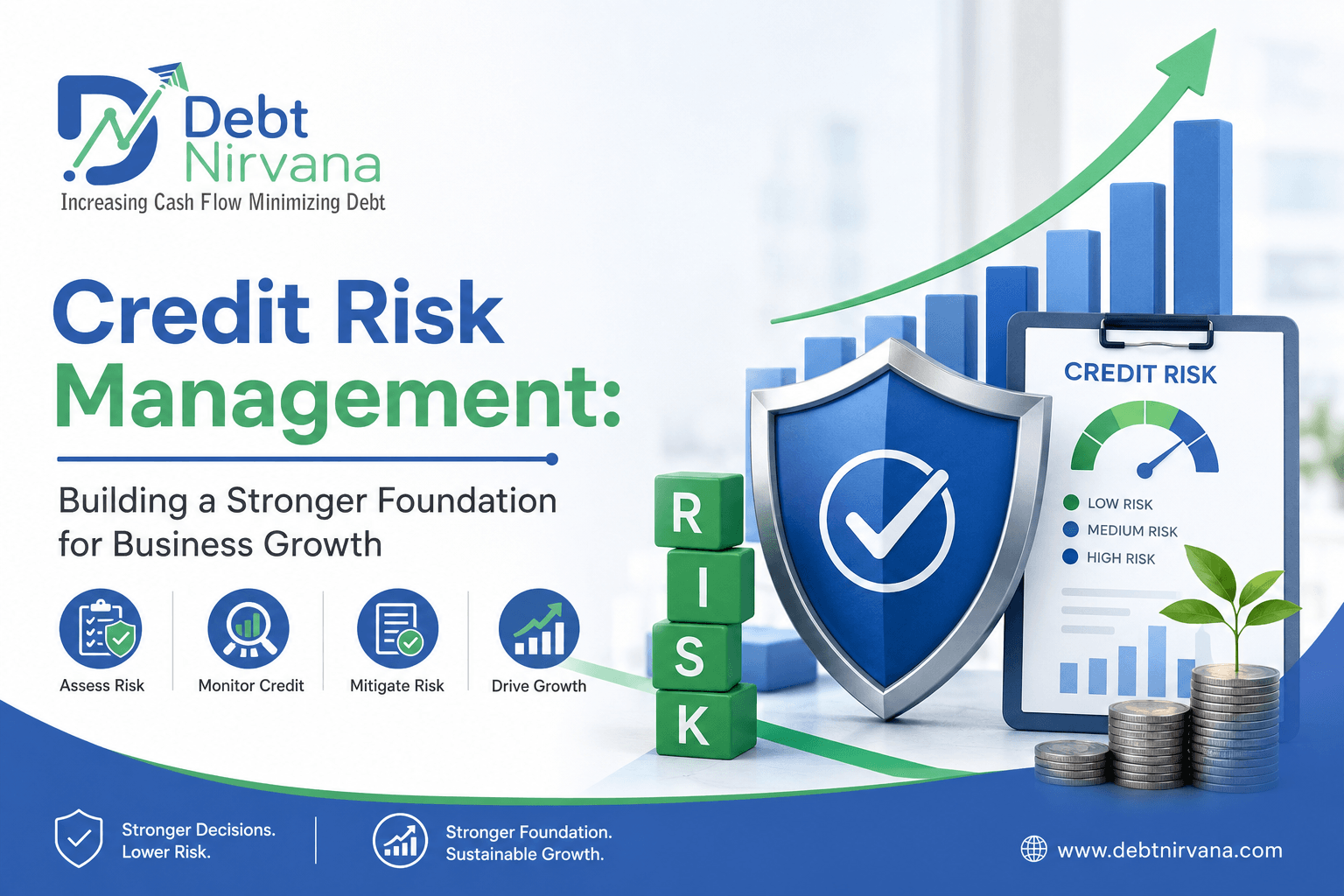

Credit Risk Management: Building a Stronger Foundation for Business Growth
Extending credit to customers is a common business practice that drives sales and strengthens long-term relationships. However, without a structured process to evaluate and monitor customer creditworthiness, businesses may face delayed payments, rising bad debts, and cash flow challenges. Credit Risk Management is the discipline of identifying, assessing, monitoring, and mitigating the risk associated with […]
Extending credit to customers is a common business practice that drives sales and strengthens long-term relationships. However, without a structured process to evaluate and monitor customer creditworthiness, businesses may face delayed payments, rising bad debts, and cash flow challenges.
Credit Risk Management is the discipline of identifying, assessing, monitoring, and mitigating the risk associated with extending credit. A well-designed credit risk strategy enables organizations to strike the right balance between increasing sales and protecting financial stability.
At Debt Nirvana, we help businesses build robust credit management frameworks that reduce financial exposure while supporting sustainable growth. Our end-to-end credit risk management services empower organizations to make informed credit decisions, optimize accounts receivable, and improve working capital performance.
What Is Credit Risk Management?
Credit risk management is the process of evaluating the likelihood that a customer or business partner may fail to fulfill their financial obligations and implementing measures to minimize potential losses.
Rather than simply approving or rejecting credit requests, effective credit risk management involves continuous monitoring of customer accounts, reviewing payment behavior, setting appropriate credit limits, and ensuring timely collections.
The objective is to:
- Reduce bad debt exposure
- Improve cash flow
- Strengthen working capital
- Support profitable sales growth
- Enhance financial decision-making
- Build a healthier receivables portfolio
For organizations operating in competitive markets, credit risk management is no longer optional—it is a critical component of financial resilience.
Why Credit Risk Management Is Important
Poor credit decisions can impact every aspect of a business, from liquidity and profitability to customer relationships and operational efficiency.
An effective credit risk management process helps businesses:
Improve Cash Flow
Timely collections and controlled credit exposure ensure that businesses have the liquidity needed to meet operational expenses and invest in growth.
Minimize Bad Debts
Evaluating customer risk before extending credit significantly reduces the chances of payment defaults and write-offs.
Support Better Business Decisions
Reliable credit data enables management teams to make informed decisions regarding customer onboarding, sales expansion, and risk exposure.
Protect Profitability
Reducing overdue receivables lowers financing costs and improves overall business performance.
Strengthen Customer Relationships
Transparent credit policies and proactive communication create trust while minimizing disputes and misunderstandings.
Key Elements of an Effective Credit Risk Management Strategy
Successful credit risk management extends beyond initial credit approval. It requires a comprehensive approach throughout the customer lifecycle.
1. Credit Assessment and Customer Evaluation
The first step is understanding a customer’s financial health and repayment capability.
A thorough assessment typically includes:
- Financial statement analysis
- Payment history review
- Business stability evaluation
- Cash flow analysis
- Industry risk assessment
- Existing credit obligations
- Market reputation
At Debt Nirvana, our credit specialists analyze multiple financial and operational indicators to provide businesses with meaningful insights that support confident credit decisions.
2. Credit Limit Management
Assigning appropriate credit limits helps businesses control their financial exposure.
Credit limits should be determined based on:
- Financial strength
- Revenue size
- Payment history
- Industry trends
- Business relationship value
- Existing receivable balance
As customer circumstances change, periodic reviews ensure that credit limits remain aligned with current risk levels.
Debt Nirvana assists organizations in establishing dynamic credit policies that balance growth opportunities with prudent risk management.
3. Order Credit Review
Even after a customer has been approved, every new order should be reviewed against available credit limits and outstanding balances.
Effective order monitoring helps businesses:
- Prevent excessive exposure
- Identify potential payment concerns early
- Reduce blocked shipments
- Improve credit control processes
By integrating credit monitoring into order processing, businesses can avoid unnecessary financial risks while maintaining smooth operations.
4. Invoice and Billing Accuracy
Payment delays often occur because of invoice discrepancies rather than customer unwillingness to pay.
An efficient billing process includes:
- Accurate invoice generation
- Timely delivery
- Complete supporting documentation
- Correct tax calculations
- Clear payment terms
Debt Nirvana supports businesses in strengthening billing processes to reduce disputes and accelerate payment cycles.
5. Cash Application and Reconciliation
Accurately matching customer payments with outstanding invoices is essential for maintaining reliable financial records.
Effective cash application provides:
- Better receivable visibility
- Faster reconciliation
- Reduced unapplied cash
- Improved reporting accuracy
Proper reconciliation also enables collection teams to focus on genuinely overdue accounts instead of administrative issues.
6. Collection Management
Collections are an integral part of credit risk management.
A structured collection strategy includes:
- Automated payment reminders
- Follow-up schedules
- Customer communication
- Dispute resolution
- Escalation procedures
- Recovery planning
Debt Nirvana’s experienced collection professionals help businesses improve recovery rates while preserving valuable customer relationships through ethical and professional engagement.
Common Types of Credit Risk
Understanding different forms of credit risk enables businesses to develop targeted mitigation strategies.
Default Risk
The possibility that a customer will fail to pay outstanding obligations.
Concentration Risk
Excessive dependence on a single customer or industry increases financial vulnerability.
Industry Risk
Economic downturns or sector-specific challenges may affect customers’ repayment capabilities.
Geographic Risk
Businesses operating across borders may face risks arising from regulatory changes, political instability, or economic fluctuations.
Counterparty Risk
The possibility that contractual obligations may not be fulfilled by another party involved in a financial transaction.
Best Practices for Effective Credit Risk Management
Businesses that consistently manage credit risk successfully often follow these proven practices.
Develop a Clear Credit Policy
Define standardized procedures for customer onboarding, credit approvals, payment terms, and escalation processes.
Perform Regular Credit Reviews
Customer financial conditions evolve over time. Periodic reassessments help identify emerging risks before they impact collections.
Monitor Accounts Receivable Aging
Analyzing aging reports enables businesses to prioritize collection efforts and reduce overdue balances.
Diversify Customer Exposure
Avoid overreliance on a limited number of customers or industries to reduce concentration risk.
Leverage Data and Technology
Automation and analytics improve credit scoring, payment tracking, and portfolio monitoring while reducing manual errors.
Foster Collaboration Between Teams
Sales, finance, and collections departments should work together to maintain consistent credit decisions and customer communication.
Challenges Businesses Face in Credit Risk Management
Despite having policies in place, many organizations struggle with:
- Incomplete customer information
- Manual approval processes
- Delayed financial reporting
- Rising customer defaults
- Inefficient collections
- Lack of continuous monitoring
- Growing receivables portfolios
Addressing these challenges requires both expertise and structured processes.
Debt Nirvana helps businesses overcome these obstacles by delivering scalable credit risk management solutions tailored to industry-specific requirements.
How Debt Nirvana Supports Credit Risk Management
We understand that effective credit management is about enabling business growth while protecting financial health.
Our comprehensive Credit Risk Management services include:
- Customer credit assessment
- Financial statement analysis
- Credit limit recommendations
- Order credit review
- Billing process support
- Cash application and reconciliation
- Accounts receivable monitoring
- Collection management
- Credit policy advisory
- Portfolio risk analysis
By combining industry expertise with proven methodologies, we help businesses strengthen credit controls, improve collection performance, and optimize working capital.
Our approach is designed to reduce financial risk without creating unnecessary barriers to customer acquisition and revenue growth.
Benefits of Partnering with Debt Nirvana
Organizations that work with Debt Nirvana gain access to:
- Experienced credit professionals
- Standardized credit evaluation processes
- Improved receivables management
- Reduced bad debt exposure
- Enhanced cash flow visibility
- Faster decision-making
- Scalable credit operations
- Better working capital efficiency
Whether you are expanding into new markets or managing a growing customer base, our solutions are designed to support your long-term financial success.
Conclusion
Credit risk management is more than a financial control function—it is a strategic business capability that supports profitability, cash flow, and sustainable growth.
By implementing structured credit assessment processes, monitoring customer exposure, strengthening collections, and continuously evaluating risk, businesses can reduce uncertainty while building stronger customer relationships.
We partner with organizations to create intelligent, proactive credit risk management strategies that protect revenue and unlock growth opportunities. With our expertise and end-to-end support, businesses can confidently extend credit while maintaining financial discipline and operational efficiency.
Frequently Asked Questions (FAQs)
1. What is credit risk management?
Credit risk management is the process of identifying, assessing, monitoring, and controlling the risk of financial loss resulting from a customer’s inability or unwillingness to meet payment obligations.
2. Why is credit risk management important?
It helps businesses reduce bad debts, improve cash flow, optimize working capital, and make informed credit decisions while supporting sustainable growth.
3. What are the main components of credit risk management?
Key components include credit assessment, credit limit management, order review, billing support, cash application, accounts receivable monitoring, and collections management.
4. How does Debt Nirvana help businesses manage credit risk?
Debt Nirvana provides end-to-end credit risk management services, including customer credit evaluation, credit policy advisory, receivables monitoring, collections support, and portfolio risk analysis to help businesses reduce financial exposure.
5. Which industries benefit from credit risk management?
Manufacturing, wholesale distribution, logistics, exports, pharmaceuticals, IT services, financial institutions, and any B2B business that extends trade credit can benefit from a structured credit risk management process.
6. How often should businesses review customer credit limits?
Credit limits should be reviewed periodically or whenever there are significant changes in a customer’s financial condition, payment behavior, or market environment.