
Step-by-Step Guide to Debt Recovery in India
Unpaid invoices can disrupt cash flow, delay business growth, and create unnecessary financial pressure. Whether you are a small business owner, an exporter, a manufacturer, or a large enterprise, recovering outstanding payments is essential to maintaining healthy business operations. However, debt recovery is not simply about collecting overdue amounts. It requires a structured approach, proper […]
Unpaid invoices can disrupt cash flow, delay business growth, and create unnecessary financial pressure. Whether you are a small business owner, an exporter, a manufacturer, or a large enterprise, recovering outstanding payments is essential to maintaining healthy business operations. However, debt recovery is not simply about collecting overdue amounts. It requires a structured approach, proper documentation, legal awareness, and consistent follow-up.
Understanding the debt recovery process can help businesses improve collections while preserving valuable client relationships. This guide explains the key steps involved in debt recovery in India and how businesses can improve their chances of recovering outstanding dues efficiently.
Understanding Debt Recovery
Debt recovery is the process of collecting unpaid money owed by an individual or business. The objective is to recover outstanding receivables while maintaining compliance with applicable laws and business ethics.
In India, debt recovery can involve several methods, including direct communication, negotiation, structured settlement plans, legal notices, arbitration, and court proceedings. The right approach depends on the age of the debt, the debtor’s financial condition, and the relationship between both parties.
Many businesses delay action when payments become overdue. Unfortunately, the longer a debt remains unpaid, the lower the chances of successful recovery. Taking timely action is critical.
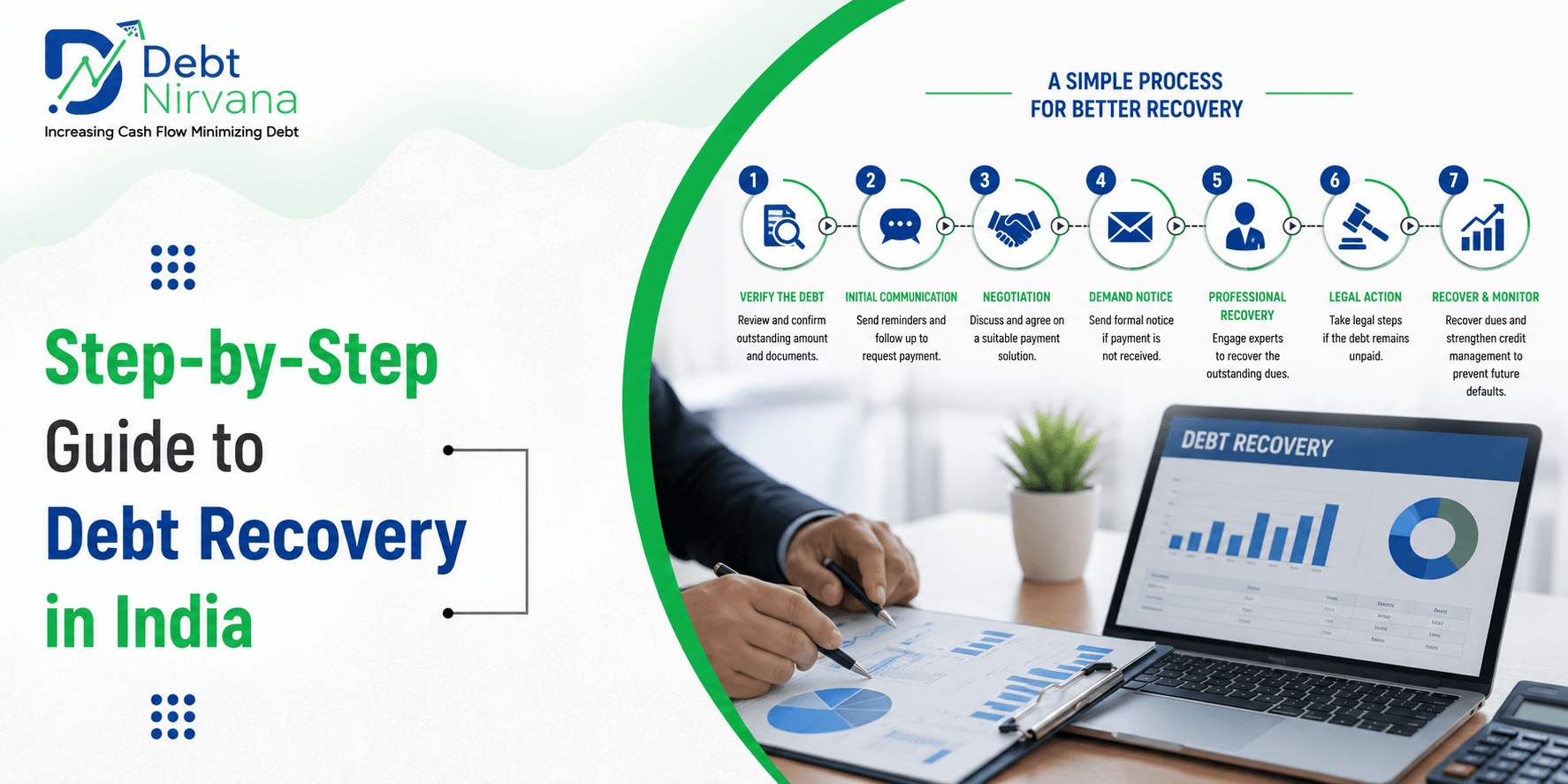
Step 1: Review and Verify the Outstanding Debt
Before initiating recovery efforts, it is important to confirm the accuracy of the outstanding amount.
Review all relevant documents, including:
- Purchase orders
- Contracts or agreements
- Delivery challans
- Invoices
- Payment records
- Correspondence with the customer
Verifying the debt ensures there are no disputes regarding the amount owed. It also prepares you for future discussions or legal action if necessary.
Step 2: Assess the Debtor’s Financial Position
Not every delayed payment indicates a refusal to pay. Some businesses face temporary cash flow challenges, operational difficulties, or market downturns.
Before escalating the matter, evaluate:
- Payment history
- Creditworthiness
- Current financial standing
- Previous communication patterns
Understanding the debtor’s situation helps determine the most effective recovery strategy.
This is where credit risk assessment and business information reports become valuable. Companies like Debt Nirvana help businesses evaluate financial risk before and during the recovery process.
Step 3: Initiate Professional Communication
The first recovery step should always be professional and respectful communication.
Start by sending:
- Payment reminders
- Statement of accounts
- Follow-up emails
- Telephone calls
Many payment delays are resolved during this stage. Clear communication often encourages debtors to settle accounts without further escalation.
Maintain records of all communication, including emails, call logs, and letters. Proper documentation can prove valuable if legal proceedings become necessary.
Step 4: Negotiate a Payment Solution
In many cases, debtors may acknowledge the debt but struggle to make a full payment immediately.
Instead of allowing the debt to remain unpaid, consider negotiating:
- Partial payments
- Installment plans
- Revised payment schedules
- Settlement agreements
Negotiation often results in faster recovery than prolonged disputes.
A structured repayment arrangement can help both parties reach a practical solution while avoiding unnecessary legal costs.
Step 5: Send a Formal Demand Notice
If reminders and negotiations do not produce results, the next step is issuing a formal demand notice.
A demand notice typically includes:
- Outstanding amount details
- Invoice references
- Payment deadline
- Consequences of non-payment
A professionally drafted demand notice demonstrates seriousness and often motivates debtors to respond.
Many businesses achieve successful recovery at this stage without proceeding further.
Step 6: Engage a Debt Recovery Specialist
When internal collection efforts fail, professional assistance can significantly improve recovery outcomes.
Debt recovery agencies possess:
- Collection expertise
- Industry knowledge
- Legal understanding
- Negotiation skills
- Access to debtor information
Professional recovery specialists understand how to approach difficult cases while maintaining compliance and professionalism.
Debt Nirvana provides debt recovery solutions designed to help businesses recover outstanding receivables through strategic and structured recovery processes.
Step 7: Explore Alternative Dispute Resolution
Not every debt recovery matter requires court intervention.
Alternative dispute resolution methods may include:
Mediation
A neutral third party helps both sides reach a mutually acceptable settlement.
Arbitration
An independent arbitrator reviews the dispute and delivers a binding decision.
These methods are often faster and more cost-effective than lengthy court proceedings.
Step 8: Initiate Legal Proceedings if Necessary
When all recovery efforts fail, legal action may become necessary.
Depending on the circumstances, businesses may pursue:
- Civil recovery suits
- Commercial court proceedings
- Arbitration enforcement
- Insolvency-related actions
Legal proceedings should generally be considered a last resort after exhausting amicable recovery options.
Strong documentation significantly improves the chances of successful legal recovery.
Step 9: Monitor Recovery Progress
Debt recovery does not end after sending notices or filing claims.
Businesses should continuously monitor:
- Payment commitments
- Settlement timelines
- Court developments
- Recovery milestones
Consistent follow-up ensures that agreed actions move forward and prevents cases from becoming stagnant.
Step 10: Strengthen Future Credit Management
One of the most valuable lessons from debt recovery is prevention.
Businesses can reduce future payment risks by:
- Conducting credit assessments before extending credit
- Establishing clear payment terms
- Using business information reports
- Monitoring customer payment behaviour
- Maintaining strong receivables management practices
A proactive credit management strategy reduces bad debts and improves cash flow stability.
Common Challenges in Debt Recovery
Businesses across India often face similar collection challenges, including:
- Deliberate payment delays
- Disputed invoices
- Lack of documentation
- Poor credit evaluation
- Communication breakdowns
- Cross-border recovery issues
Addressing these challenges requires a structured recovery framework supported by accurate information and professional expertise.
Why Professional Debt Recovery Support Matters
Recovering unpaid invoices can consume significant time and resources. Internal teams often struggle to balance recovery efforts with day-to-day business operations.
Professional debt recovery services help businesses:
- Improve collection rates
- Reduce recovery timelines
- Minimise financial risk
- Strengthen cash flow
- Maintain compliance
- Preserve valuable business relationships
A strategic recovery partner can transform overdue receivables into recovered revenue while allowing businesses to focus on growth.
Conclusion
Debt recovery is not simply about collecting money. It is a structured process that combines communication, negotiation, legal awareness, and financial analysis. Acting quickly and following a systematic recovery approach significantly improves the chances of successful collection.
Businesses that implement strong receivables management practices and seek professional support when needed are better positioned to reduce bad debts and maintain healthy cash flow.
Whether you are dealing with a few overdue invoices or a large portfolio of outstanding receivables, a proactive debt recovery strategy can help protect your financial stability and support long-term business growth.
Frequently Asked Questions
What is the debt recovery process in India?
The debt recovery process typically involves payment reminders, negotiations, demand notices, debt collection efforts, mediation, arbitration, and legal action when necessary.
How long does debt recovery take in India?
The timeline varies depending on the complexity of the case, debtor cooperation, and whether legal proceedings are required. Some cases are resolved within weeks, while others may take several months.
Can a debt recovery agency legally recover debts in India?
Yes. Professional debt recovery agencies operate within legal and regulatory frameworks to help businesses recover outstanding payments.
When should a business hire a debt recovery company?
Businesses should consider professional recovery support when invoices remain unpaid despite repeated follow-ups, or when overdue accounts begin affecting cash flow.
How can businesses prevent bad debts?
Businesses can reduce bad debt risk through credit checks, business information reports, clear payment terms, regular receivables monitoring, and proactive collection practices.
Recover Outstanding Payments with Confidence
If your business is struggling with overdue accounts, Debt Nirvana provides professional debt recovery, credit risk management, and receivables management solutions designed to improve recovery outcomes and strengthen cash flow.
Contact Debt Nirvana today to learn how a structured recovery strategy can help your business reduce financial risk and recover outstanding receivables efficiently.