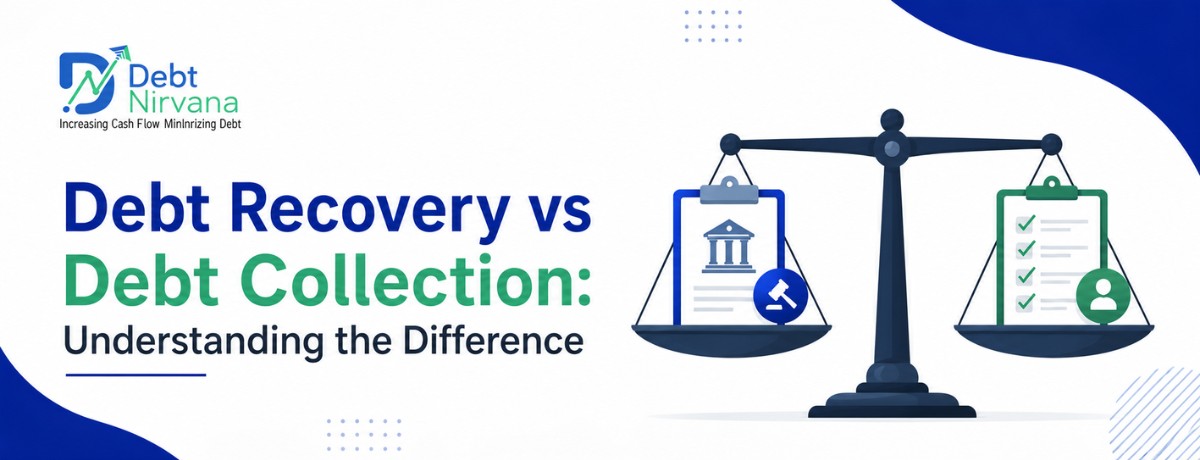

Debt Recovery vs Debt Collection: Understanding the Difference
Debt recovery and debt collection aren't the same thing. Learn how each process works, when to use one over the other, and where they overlap.
People use “debt recovery” and “debt collection” like they mean the same thing. They don’t, and mixing them up can lead you to the wrong process at the wrong stage.
Debt collection is the early-stage, relationship-focused effort to get an overdue payment back on track. A debt recovery service usually steps in later, when informal methods haven’t worked and a more structured, often legal, approach is needed.
This article breaks down exactly how the two differ, when each one applies, and how they actually work together rather than against each other.
What Is Debt Collection?
Debt collection is the process of following up on an overdue payment while the relationship with the debtor is still intact and workable.
It typically involves reminders, calls, emails, and negotiated payment plans. The goal is simple: get the money in without burning the bridge, especially if it’s an ongoing client or customer relationship.
- Payment reminders and follow-up calls
- Negotiated repayment plans
- Soft escalation through written notices
- Usually handled in-house or by a collection agency early on
Debt collection works best in the early stages of a missed payment, generally within the first 60 to 90 days, before the situation hardens into a dispute.
What Is Debt Recovery?
Debt recovery is the more structured, often legal, process of reclaiming money that debt collection efforts couldn’t resolve.
This is where things move beyond reminders and negotiation. A debt recovery service brings in formal documentation, legal notices, and where necessary, tribunal or court proceedings to recover what’s owed.
- Formal legal notices and demand letters
- Asset tracing and enforcement where applicable
- Filing claims with recovery tribunals or courts
- Used for larger amounts, older debts, or uncooperative debtors
Recovery is typically the path taken once collection has been attempted and failed, or when the debt is significant enough that legal weight is needed from the outset.
Key Differences at a Glance
Here’s how the two compare side by side.
| Aspect | Debt Collection | Debt Recovery |
| Stage | Early, informal follow-up | Later, formal escalation |
| Tone | Relationship-preserving | Firm, often adversarial |
| Methods used | Calls, emails, reminders, payment plans | Legal notices, tribunals, courts |
| Typical timeline | 0 to 90 days overdue | 90-plus days, or after collection fails |
| Legal involvement | Minimal to none | Often central to the process |
| Best suited for | Smaller, recent, or relationship-based debts | Larger, older, or contested debts |
Neither approach is better in isolation. The right one depends entirely on where the debt sits on this timeline.
How the Process Escalates From Collection to Recovery
In most real cases, collection and recovery aren’t separate paths. They’re stages of the same journey.
- Stage 1: Friendly reminders and follow-up within the first 30 days
- Stage 2: Firmer notices and structured follow-up between 30 and 60 days
- Stage 3: Formal demand notice and acknowledgment requests around 60 to 90 days
- Stage 4: Escalation to a debt recovery service once collection has clearly stalled
Skipping straight to recovery too early can damage a relationship worth preserving. Waiting too long to escalate to recovery, on the other hand, often means a weaker legal position and a debtor who’s had more time to become unreachable.
The Legal Backbone Behind Debt Recovery
In India, formal debt recovery for loans and dues owed to banks and financial institutions runs through the Debts Recovery Tribunals (DRTs). According to the Department of Financial Services, Ministry of Finance, Government of India, DRTs and their appellate counterparts, the DRATs, were established to provide expeditious adjudication and recovery of debts, with 39 DRTs and 5 DRATs currently functioning across the country.
The scale of this system is worth noting. The same government data shows that between 2017-18 and December 2024, DRTs disposed of over 1.99 lakh original applications and more than 75,900 cases filed under the SARFAESI Act, involving a combined amount exceeding ₹14.9 lakh crore across both categories.
On the collection side, conduct is governed differently. The Reserve Bank of India has directed regulated entities, including banks, NBFCs, and asset reconstruction companies, that recovery agents must not resort to intimidation or harassment, including calling borrowers at odd hours, as part of the Fair Practices Code governing debt collection efforts.
This distinction matters. Collection is bound by conduct rules focused on how you communicate. Recovery is bound by procedural law focused on how a claim is formally enforced.
Which One Does Your Business Actually Need?
A simple way to decide: look at how long the debt has been outstanding and how the debtor has responded so far.
- If the account is under 90 days overdue and the debtor is still responsive, debt collection is usually the right starting point
- If reminders and calls have gone nowhere for months, it’s time to consider a debt recovery service
- If the amount is large, or the debtor is a business showing signs of financial distress, recovery-track legal support may be worth starting earlier
- If the relationship still matters and the amount is modest, staying in the collection phase longer often makes sense
Many businesses benefit from having access to both. A Debt Collection Service India handles the early, relationship-preserving stage, while a dedicated Debt Recovery Service takes over once the situation calls for formal escalation.
Common Misconceptions
A few mix-ups come up often enough that they’re worth addressing directly.
“Debt recovery is just aggressive debt collection”
Not quite. Recovery isn’t about being harsher, it’s about using formal legal mechanisms that collection simply doesn’t involve.
“You should always start with recovery to save time”
Usually not. Jumping straight to legal escalation on a debt that could’ve been resolved with a phone call often costs more in fees and relationship damage than it saves in time.
“Once collection fails, recovery is guaranteed to work”
Recovery improves your odds significantly, but outcomes still depend on the debtor’s ability to pay, not just the process used to pursue them.
Key Takeaways
- Debt collection is early, relationship-focused follow-up; debt recovery is formal, often legal, escalation.
- Recovery through India’s tribunal system has handled hundreds of thousands of cases and lakhs of crores in disputed amounts over recent years.
- Collection is governed by conduct and communication rules, while recovery follows formal legal procedure.
- Escalating too early can damage a relationship; escalating too late can weaken your legal position.
- Most businesses benefit from access to both a collection process and a recovery option, used at the right stage.
Conclusion
Debt collection and debt recovery aren’t competing strategies. They’re two stages of the same goal: getting back what’s owed, using the right level of intensity for where things actually stand.
If you’re unsure which stage your overdue accounts are in, or need support moving from one to the other, Debt Nirvana can help you assess the situation and apply the right process from the start.