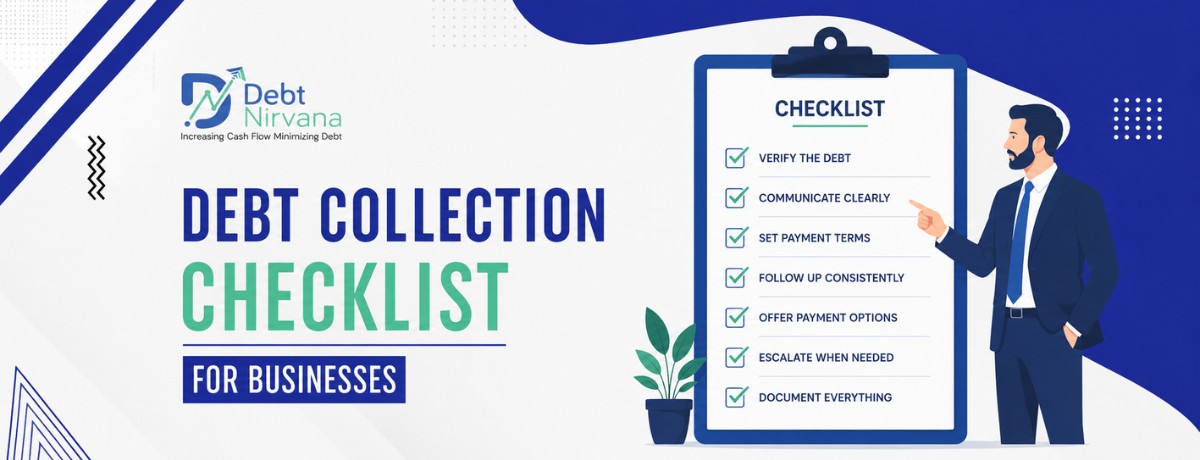

Debt Collection Checklist for Businesses
A practical debt collection checklist for businesses, covering prevention, follow-up, escalation, and when to bring in a debt collection service.
Most businesses don’t lose money because customers refuse to pay. They lose money because follow-up happens too late, or not at all.
A structured debt collection checklist fixes that. It turns a vague habit of “chasing invoices when you remember” into a repeatable process your whole team can follow.
This checklist walks through everything from prevention to escalation, so you know exactly what to do at each stage, and when it’s time to bring in a debt collection service.
Before You Extend Credit: Prevention Checklist
The best debt collection strategy starts before you ever send an invoice. A clear, written agreement gives you a solid foundation if payment ever needs to be pursued later.
☐ Use a written contract with clear payment terms for every client
☐ Run a basic credit check before extending credit on large orders
☐ Set a credit limit appropriate to the client’s payment history
☐ Require a deposit or partial payment for large or new-client projects
If your buyer is a small business supplier, note that payment terms for this category are often legally capped under applicable regulations, so it’s worth confirming the maximum allowed payment period for your specific arrangement.
At the Time of Invoicing: Setup Checklist
Good invoicing habits prevent a large share of collection problems before they start.
☐ Send invoices immediately after delivery or service completion
☐ State the due date clearly, not just the payment terms
☐ Offer multiple payment options to reduce friction
☐ Set up automated payment reminders ahead of the due date
0 to 30 Days Overdue: First Follow-Up Checklist
The first month after an invoice becomes overdue is the easiest window to recover payment without damaging the relationship.
☐ Send a friendly payment reminder soon after the due date passes
☐ Confirm the client actually received the invoice
☐ Offer a quick, low-friction way to resolve any billing disputes
☐ Log every contact attempt and response in your records
Many overdue invoices at this stage aren’t really about unwillingness to pay. The payment path is often just slow or unclear, which is why an easy resolution path matters as much as the reminder itself.
31 to 60 Days Overdue: Escalation Checklist
If payment hasn’t arrived by day 30, it’s time to shift from reminders to structured follow-up.
☐ Send a firmer written notice referencing the original payment terms
☐ Call the client directly instead of relying only on email
☐ Propose a payment plan if the client is facing genuine cash flow issues
☐ Flag the account internally for closer monitoring
An aged debtors report is worth reviewing at this stage. It gives you a clear snapshot of which accounts are falling behind and by how much, so you can prioritize follow-up accordingly.
61 to 90 Days Overdue: Formal Notice Checklist
By this stage, informal reminders have usually run their course. It’s time to formalize the process.
☐ Send a formal written demand notice with a clear deadline
☐ Reference any interest or late fees specified in the original contract
☐ Get a written acknowledgment of the debt if possible
☐ Review whether the client shows signs of broader financial distress
A written acknowledgment at this stage matters for more than negotiation. In many cases, a signed written acknowledgment of the debt, taken before too much time has passed, can also help preserve your legal right to pursue the claim later if it comes to that.
90-Plus Days Overdue: When to Bring in Outside Help
Once an account crosses 90 days with no resolution, internal follow-up alone rarely closes the gap.
☐ Compile a complete file: contract, invoices, communication history, acknowledgments
☐ Decide whether legal notice, arbitration, or a collection service fits the situation
☐ Get a clear cost estimate before committing to legal escalation
☐ Bring in a professional service for accounts beyond internal capacity
If the debtor qualifies as a small business supplier’s buyer by default, government-run dispute resolution channels may also be available as an alternative route, typically faster and lower-cost than civil litigation. For other cases, this is usually the point where working with a dedicated Debt Collection Service India makes the most sense, since structured negotiation and escalation tools go beyond what most internal teams are set up to handle.
Documentation Checklist to Maintain Throughout
Good documentation isn’t just for legal escalation. It protects you at every stage of the process.
☐ Signed contract or purchase order for every transaction
☐ Copies of all invoices and delivery confirmations
☐ A dated log of every call, email, and reminder sent
☐ Any written payment promises or partial payment records
☐ Formal notices and proof of delivery for each one sent
Keeping this file current, rather than assembling it after a dispute arises, is what makes escalation faster and less stressful if it becomes necessary.
Quick Reference: Checklist by Stage
Here’s the entire process condensed into one reference table.
| Stage | Key Action | Goal |
| Before credit | Written contract, credit check, deposit | Prevent future disputes |
| At invoicing | Clear due date, easy payment options | Reduce payment friction |
| 0-30 days overdue | Friendly reminder soon after due date | Quick, low-friction resolution |
| 31-60 days overdue | Firm notice, direct call, payment plan | Structured follow-up |
| 61-90 days overdue | Formal written demand, acknowledgment | Protect legal position |
| 90-plus days overdue | Compile file, escalate to professionals | Serious recovery action |
Following this sequence consistently, rather than skipping straight to legal threats or waiting too long to act, is what separates businesses with healthy cash flow from those constantly chasing overdue invoices. A reliable Debt Collection Agency can support any stage of this process once internal follow-up has run its course.
Key Takeaways
- Prevention, through contracts, credit checks, and clear terms, reduces collection problems before they start.
- Following up quickly after a missed payment significantly improves recovery rates.
- Escalation should be staged: reminders, firm notices, formal demand, then professional support.
- A timely written acknowledgment of debt can help preserve your legal right to pursue recovery later.
- Once an account passes 90 days overdue, bringing in a debt collection service is usually more effective than continued internal follow-up.
Conclusion
A consistent debt collection checklist takes the guesswork out of chasing payments. It also keeps your team acting quickly, instead of letting overdue invoices sit until they become a real cash flow problem.
If your business is dealing with accounts that have moved past internal follow-up, working with an experienced Debt Collection Service India or a trusted Debt Collection Agency can help you recover what’s owed while keeping the process professional and structured.