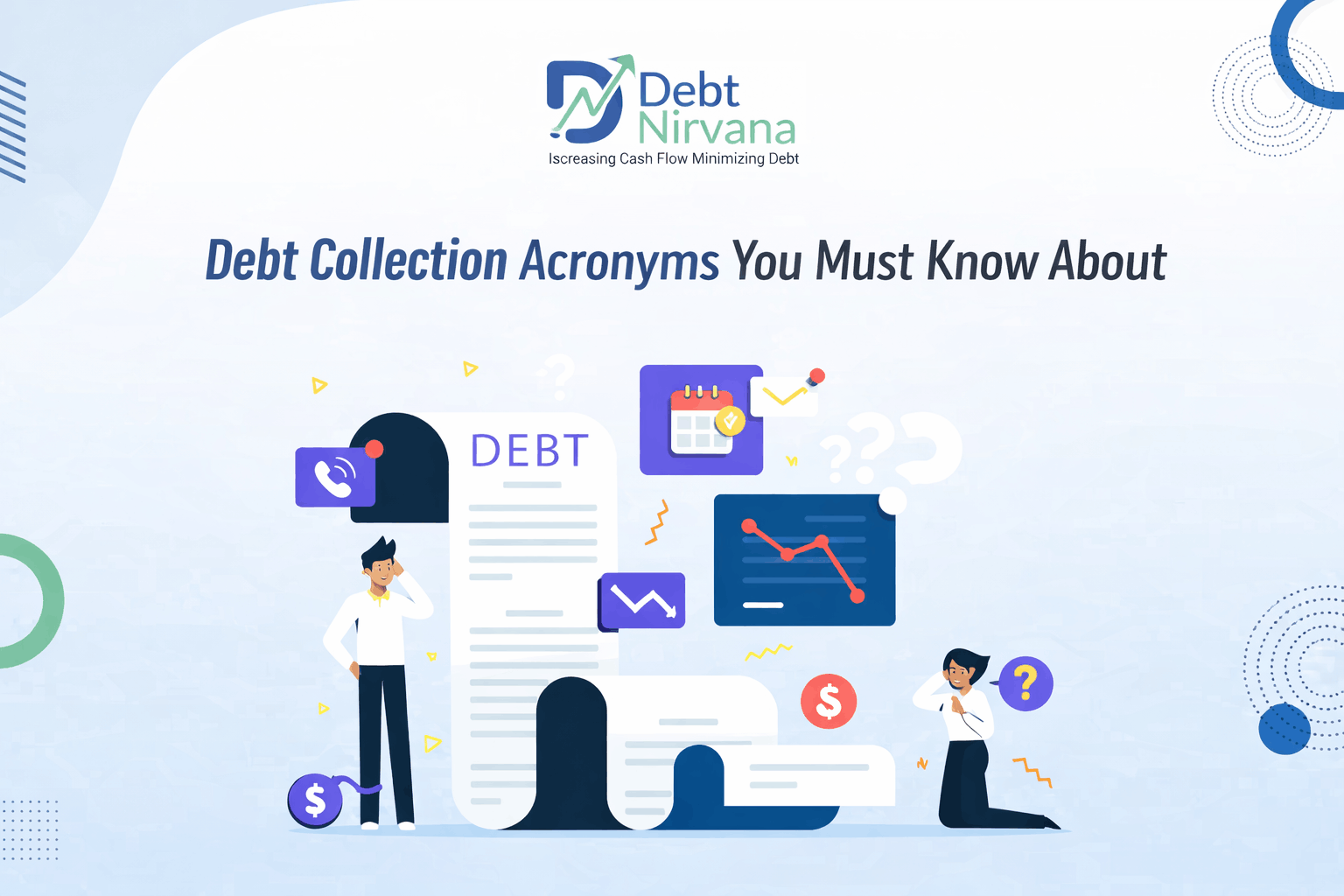

Debt Collection Acronyms You Must Know About
Most people believe they are familiar with common abbreviations and terminology. But then again, every sector has its own set of jargon and acronyms.
The debt collection industry uses several technical terms and acronyms that may seem confusing to businesses unfamiliar with structured receivables management. Whether you are managing internal collections or working with a Debt collection agency India, understanding these acronyms can improve communication, reduce misunderstandings, and strengthen your recovery strategy.
This guide explains the most important debt collection acronyms every business in India should know, along with practical context on how they impact credit control, receivables management, and bad debt recovery.
Why Understanding Debt Collection Terminology Matters
Clear understanding of industry terminology helps businesses:
- Interpret recovery reports accurately
- Communicate effectively with a Debt collection company India
- Monitor cash flow and receivables health
- Reduce disputes and compliance risks
- Make informed credit decisions
When partnering with a professional Debt collection service India, clarity in terminology leads to better collaboration and improved recovery outcomes.
Essential Debt Collection Acronyms Explained
1. DSO – Days Sales Outstanding
DSO measures the average number of days it takes a company to collect payment after a sale.
A high DSO indicates delayed payments and potential liquidity issues. Reducing DSO is a primary goal of any structured debt collection strategy.
2. AR – Accounts Receivable
Accounts Receivable refers to the outstanding invoices or money owed to a business by its customers.
Effective AR management ensures steady cash flow and reduces the risk of bad debt.
3. NPA – Non Performing Asset
Common in financial services, NPA refers to loans or receivables where repayment has stopped for a specified period.
Early intervention from a Debt collection agency India can prevent AR accounts from turning into NPAs.
4. PTP – Promise to Pay
PTP indicates that a debtor has committed to making payment on a specific date.
Professional recovery teams track PTP commitments closely to ensure follow through and structured escalation if required.
5. FD – Final Demand
Final Demand is a formal communication sent before legal action or serious escalation begins.
It signals urgency while maintaining compliance and professional tone.
6. TAT – Turnaround Time
TAT refers to the time taken to resolve a collection case.
Shorter TAT indicates efficient recovery processes and structured engagement.
7. OTS – One Time Settlement
OTS refers to a negotiated agreement where a debtor pays a reduced lump sum to settle the account fully.
This approach is often used in complex or long pending cases.
8. CE – Collection Efficiency
Collection Efficiency measures the percentage of receivables successfully recovered within a defined period.
A higher CE ratio reflects strong recovery performance.
9. Write Off
A write off occurs when a business classifies debt as unrecoverable for accounting purposes.
Partnering with a professional Debt collection company India can significantly reduce the need for write offs.
10. Skip Tracing
Skip tracing is the process of locating debtors who have changed contact details or address.
Advanced data analytics and field investigation techniques are used in this process.
11. Aging Report
An aging report categorizes outstanding receivables based on how long they have been overdue.
It typically includes 30 day, 60 day, 90 day, and 120 day buckets.
12. Recovery Rate
Recovery Rate refers to the percentage of outstanding debt successfully collected.
Professional Debt collection service India providers use analytics driven strategies to maximise recovery rates.
How These Acronyms Impact Your Business
Understanding these terms is not just about industry knowledge. They directly affect:
- Working capital management
- Cash flow forecasting
- Credit risk mitigation
- Financial reporting accuracy
- Legal compliance
Businesses that actively monitor DSO, AR ageing, and collection efficiency are better positioned to maintain financial stability.
Why Businesses Partner with Experts
While understanding acronyms is essential, implementing structured recovery systems requires expertise.
Many organisations collaborate with Debt Nirvana to strengthen their receivables management and bad debt recovery processes.
Learn more about Debt Nirvana here:
If you are seeking structured and compliant recovery solutions, explore Debt collection company India services here:
For real world recovery success examples, review Case Studies of Debt Collection:
The Role of a Professional Debt Collection Agency in India
A reputable Debt collection agency India offers:
- Data driven recovery strategies
- Ethical and compliant engagement
- Structured escalation frameworks
- Legal risk mitigation
- Detailed performance reporting
Professional agencies understand regulatory guidelines, debtor psychology, and industry best practices, ensuring recovery without reputational damage.
Final Thoughts
Debt collection terminology can seem complex at first glance. However, once understood, these acronyms provide powerful insight into receivables performance and recovery strategy.
Whether you are managing collections internally or working with a Debt collection service India, clarity in communication and structured processes are critical for improving cash flow and reducing financial risk.
By understanding key debt collection acronyms and partnering with a trusted Debt collection company India, businesses can build stronger financial systems, protect working capital, and ensure long term operational resilience.